
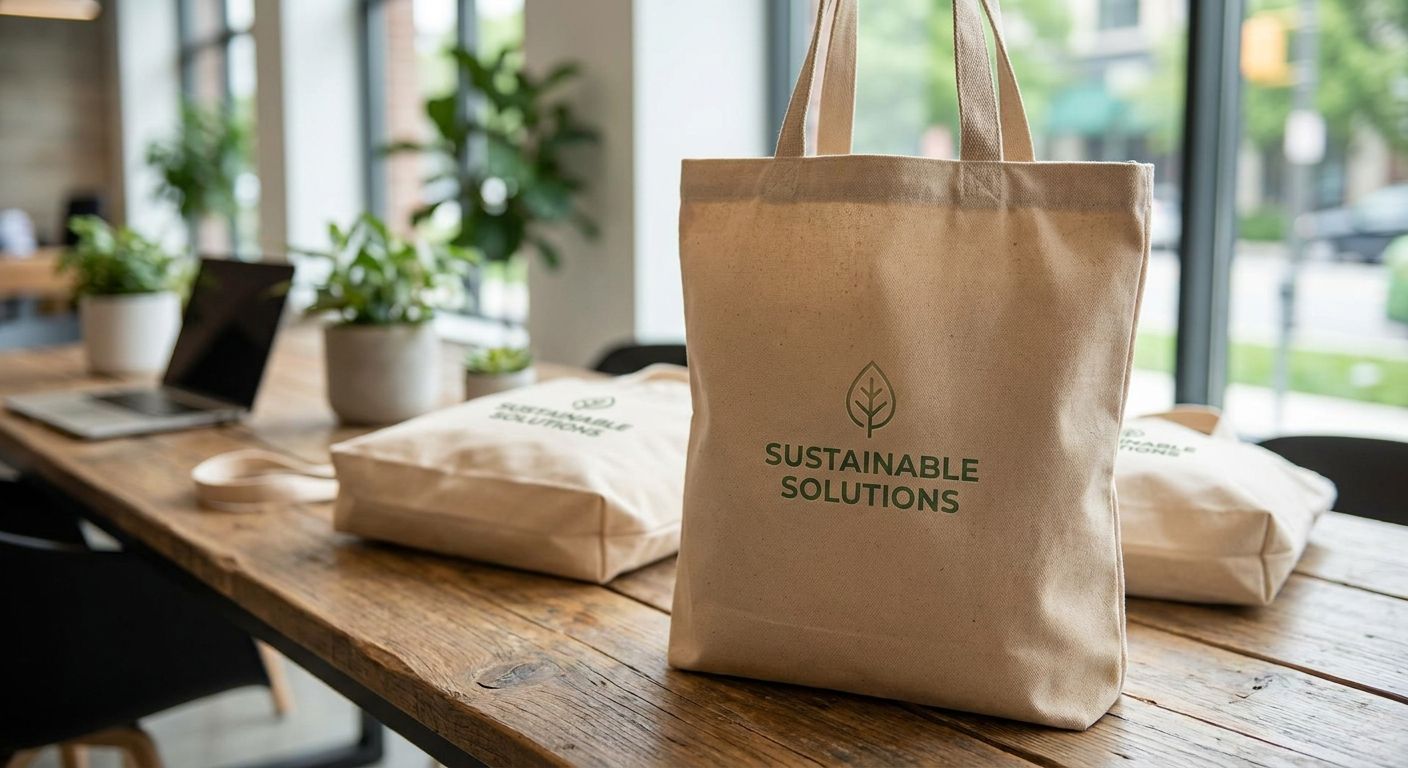
Ecobag personalizada for companies is a reusable, custom-printed tote bag used as a corporate gift, trade-show handout, or retail packaging swap, built to keep a brand in front of the customer long after the event ends. Companies buying in bulk care about different things than a single consumer ordering one bag online: fold-flat storage for warehousing, print durability through dozens of washes, and a material that survives shipping without tearing at the seams.
- Ecobag personalizada in 2026 works best in 150-280 GSM cotton canvas for daily-use gifts and 80 GSM non-woven TNT for mass giveaways.
- Dreamsloveatelie produces custom eco-bags for companies and treats sample approval as mandatory before full production.
- Cotton canvas costs more per bag but survives years of reuse; non-woven TNT is cheaper to distribute in volume but tears faster.
- Skipping a physical sample is the single most common mistake companies make when ordering ecobag personalizada in bulk.
Why ecobag personalizada matters for companies
A company ordering ecobag personalizada is not buying a bag — it's buying repeated brand exposure every time an employee or customer carries it. Dreamsloveatelie, a personalized corporate gifts company, treats this as the whole point of the product: a bag that gets thrown away after one use delivers zero return on the print run.
The difference between a bag that survives to 2027 and one that's binned in a month usually comes down to three decisions made before printing starts: material weight, size, and whether a sample was tested before the full order shipped. Get those three wrong and the campaign budget goes into a landfill instead of a shopping trip.
Define the campaign goal for the ecobag
Before choosing fabric or print method, decide what the bag needs to survive. A conference giveaway used once needs different specs than a retail packaging bag reused weekly.
- Trade-show handout: light material, low cost per unit, print visibility over durability
- Employee gift: mid-weight cotton, expected to last 1-2 years of casual use
- Retail bag-for-life: heaviest fabric available, reinforced handles, daily-use durability
- Sustainability campaign asset: recycled or natural fiber, message printed on the bag itself
- Client onboarding kit item: matched to other branded materials in the kit
Choose the base material
Material choice is the single biggest driver of both cost and lifespan for ecobag personalizada. Cotton canvas typically runs 150-280 GSM (grams per square meter); heavier fabric in that range survives daily grocery use, while lighter cotton in the 100-140 GSM band works fine for a single-day conference giveaway. Non-woven TNT, common in the Brazilian promotional market, usually sits around 80 GSM and costs less per unit but tears faster under repeated heavy loads.
- Cotton canvas (150-280 GSM): best for gifts meant to last years
- Non-woven TNT (around 80 GSM): best for mass distribution at low cost per bag
- Jute: best for a rustic, sustainability-forward look on retail packaging
- Recycled PET (RPET), commonly made from 5-8 recycled plastic bottles per bag: best for campaigns built around a recycling message
- Blended cotton: a middle ground when full canvas weight isn't in budget
Design the print and brand placement
A logo printed too small or off-center is the most common reason a corporate gift looks cheap even when the bag itself is solid.
- Keep the logo at a size legible from 2-3 meters away, not just up close
- Center placement on the front panel reads better than a corner logo on most bag shapes
- Silkscreen holds up longer on cotton than heat transfer for high-wash-count bags
- Match Pantone codes to brand guidelines rather than approving on-screen color alone
- Leave margin around the print area so it survives folding without cracking
Set the size and gusset for real use
Companies frequently order a size that looks good in a photo but is too small to actually replace a shopping bag or laptop tote, which kills the whole reuse case.
- Confirm the bag fits an A4 folder or laptop if that's the intended use case
- Add a gusset (side depth) if the bag needs to hold more than flat paper goods
- Check that the folded size fits the storage boxes the warehouse team already uses
- Test handle length against a shoulder carry, not just a hand carry
- Confirm the bottom seam is reinforced if the bag will carry weight regularly
Decide the distribution channel
Where the bag gets handed out changes what specs actually matter. A bag mailed to a client needs to survive shipping; a bag handed out at a booth just needs to survive one afternoon.
- Direct mail: needs a flat-fold size and a sturdier bottom seam
- Event booth handout: prioritize low cost per unit over long-term durability
- In-store giveaway with purchase: match the bag size to the store's typical bag size expectation
- Employee onboarding kit: match materials to the rest of the kit for a consistent unboxing feel
- Sustainability campaign giveaway: pair the bag with a printed message explaining the material choice
Test a sample batch before full production
Skipping this step is the fastest way to end up with a warehouse of bags nobody wants to hand out. This is also the point where a company benefits from a supplier that runs a full sample approval process, which is where Dreamsloveatelie's production workflow fits before the bulk order goes to print.
- Request a physical sample, not just a digital mockup
- Check the fabric weight against the spec sheet, not just the swatch photo
- Fold the sample flat and confirm it matches storage expectations
- Run the printed logo through a wash test if the bag is meant for repeat use
- Get sign-off from whoever owns the brand guidelines before releasing the full order
Measure return on the giveaway
A reusable bag only pays off if it actually gets reused. The Danish Environmental Protection Agency's 2018 lifecycle study found a non-woven polypropylene bag needs to be reused around 52 times, and a conventional cotton tote around 7,100 times, to match the environmental footprint of a single plastic bag — a useful benchmark for setting internal expectations about what "sustainable" actually means for a specific material choice.
- Track how many bags are still visibly in use 3-6 months after distribution
- Ask sales or event staff for informal feedback on bag pickup rate
- Compare cost-per-bag against cost-per-impression for other giveaway items
- Revisit material choice for the next order based on what survived
Comparing ecobag personalizada options for companies
| Material | Best For | Key Limitation |
|---|---|---|
| Cotton canvas (150-280 GSM) | Long-term gifts, premium onboarding kits | Heavier and pricier to ship in bulk |
| Non-woven TNT (around 80 GSM) | Trade shows, mass giveaways | Tears faster under repeated heavy loads |
| Jute | Retail packaging, sustainability positioning | Rougher texture limits fine print detail |
| Recycled PET (RPET) | Campaigns built around a recycling message | Fewer print finish options than cotton |
Verdict: cotton canvas at 150 GSM or heavier is the safest default for ecobag personalizada in 2026 when the bag needs to survive past a single event.
Get a custom eco-bag quote
Talk through material, size and print options for your company order.
Common mistakes companies make with ecobag personalizada
- Ordering one size for every use case — a bag sized for a laptop doesn't work as a grocery bag-for-life, and vice versa.
- Skipping the physical sample — a digital mockup never shows how the fabric folds or how the print holds after washing.
- Choosing material on price alone — a cheaper non-woven bag that tears in a month costs more per impression than a durable cotton one.
- Printing the logo too small — a logo unreadable from across a room wastes the print run's brand value.
- Ignoring storage and shipping size — a bag that doesn't fold flat adds unplanned freight cost to a bulk order.
FAQ
What's the best material for ecobag personalizada in 2026?
Cotton canvas at 150-280 GSM is the safest default for companies wanting a bag that survives repeat use. Non-woven TNT at around 80 GSM works better for one-time mass giveaways where cost per unit matters more than durability.
Is cotton canvas better than non-woven TNT for corporate gifts?
Cotton canvas lasts longer and prints more sharply, making it better for gifts meant to be used repeatedly. Non-woven TNT costs less per unit and suits single-event handouts where volume matters more than lifespan.
How much does ecobag personalizada cost for a company order?
Cost depends on material, print method, and order size, so it's worth requesting a quote based on the exact bag count and design before budgeting a campaign. Pricing structures vary enough between suppliers that a fixed number here would be misleading.
What size should a corporate ecobag be?
Size should match the intended use: a laptop or A4-folder gift needs different dimensions than a retail bag-for-life. Confirm the folded size also fits existing warehouse storage before finalizing the order.
Can ecobags carry a multi-color logo?
Yes, silkscreen and digital transfer methods both support multi-color logos on cotton and non-woven fabric. Silkscreen tends to hold color better through repeated washing on high-use bags.
How many times does a reusable bag need to be used to beat a plastic bag environmentally?
The Danish Environmental Protection Agency's 2018 lifecycle study found a non-woven polypropylene bag needs around 52 reuses and a conventional cotton bag around 7,100 reuses to match a single plastic bag's environmental footprint. That gap is why material choice should match how often the bag will actually be carried.
Is jute or cotton better for a sustainability campaign?
Jute reads more visibly as a natural, sustainable material but limits fine print detail compared to cotton canvas. Cotton canvas prints sharper logos and still supports a sustainability message when paired with recycled or organic sourcing.
Where can companies order ecobag personalizada in 2026?
Dreamsloveatelie produces custom eco-bags for companies, covering material selection, print, and sample approval before a full production run. Requesting a sample before committing to a bulk order is standard practice regardless of supplier.
One last thing
The Danish EPA numbers above are worth repeating on their own: a cotton tote needs roughly 7,100 reuses to environmentally break even against a single plastic bag, which means a bag that gets used twice and then forgotten in a drawer is arguably worse for a sustainability campaign's optics than no giveaway at all. The fix isn't a different material — it's designing the bag well enough, and testing the sample thoroughly enough, that people actually keep using it into 2027 and beyond.